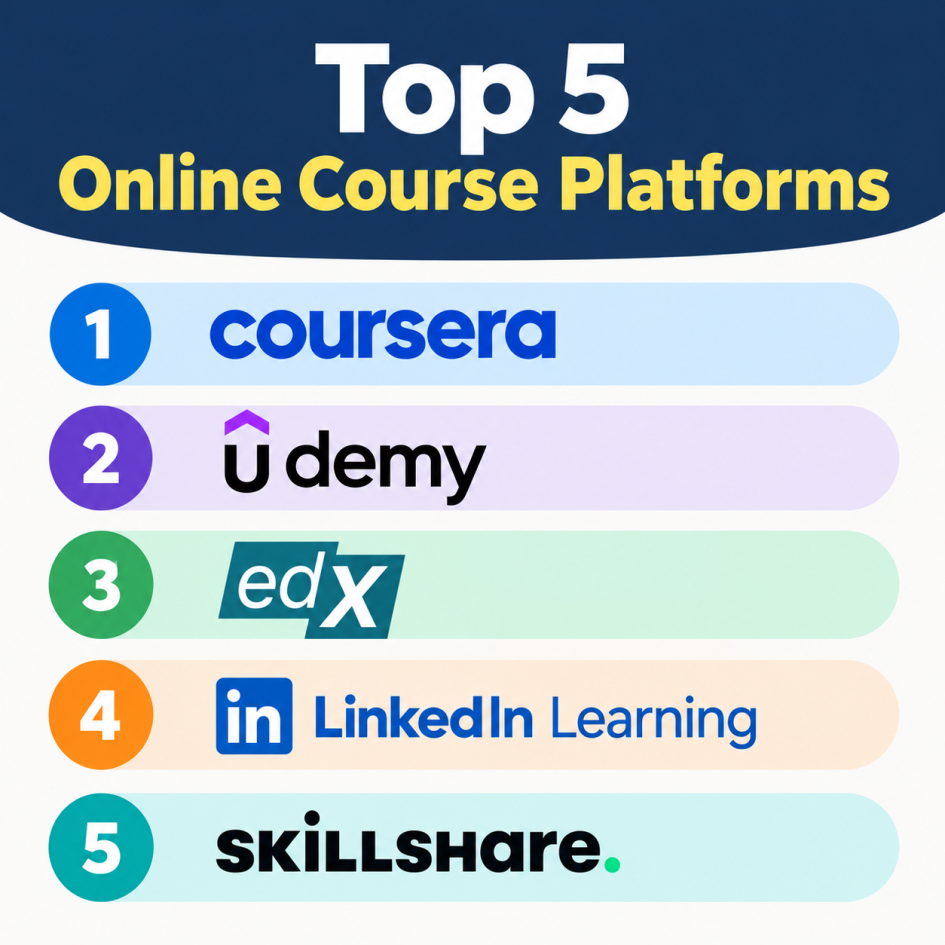
Online learning continues to be a popular way to develop new skills, advance a career, or explore personal interests. From university-backed qualifications to practical software tutorials and creative workshops, online course platforms offer flexible learning opportunities for people at different experience levels and budgets.
1. Coursera
Best for career development and recognised credentials
Coursera is a leading choice for learners seeking structured courses, professional certificates, and university-level education. It partners with universities and companies to provide training in business, technology, data science, artificial intelligence, and other fields.
Its professional certificate programmes are particularly useful for people looking to strengthen their CVs or transition into new careers. Many courses offer flexible schedules, graded assignments, and practical projects. Some learning materials can be accessed for free, although certificates and full programme access may require payment.
Pros: University and industry partnerships, structured learning paths, professional certificates.
Cons: Some programmes can be expensive, and subscriptions require consistent use to provide good value.
2. Udemy
Best for affordable, practical skills
Udemy is a popular marketplace offering courses across programming, marketing, photography, business, personal development, and many other subjects.
Its main advantage is flexibility. Learners can purchase individual courses rather than commit to a long-term subscription. Many courses include downloadable resources, practical exercises, and lifetime access under applicable purchase terms.
However, course quality varies because instructors create and publish their own content. Reading recent reviews, checking course updates, and previewing lessons can help you choose wisely.
Pros: Broad subject selection, frequent discounts, practical tutorials.
Cons: Inconsistent teaching quality and certificates that generally demonstrate completion rather than formal accreditation.
3. edX
Best for academic learning
edX is an excellent option for learners who prefer rigorous, university-style education. Its catalogue covers computer science, engineering, economics, humanities, and business, with courses developed by universities and other educational institutions.
Many courses provide free audit options, allowing students to explore the material before paying for graded assessments or certificates. More advanced programmes may offer professional credentials or pathways connected to further academic study.
edX is particularly suitable for independent learners who want depth and structure rather than short, informal tutorials.
Pros: University-level content, flexible study, free audit options.
Cons: Verified certificates and advanced programmes can be costly, and some courses require substantial commitment.
4. LinkedIn Learning
Best for workplace and business skills
LinkedIn Learning focuses on professional development, offering courses in leadership, communication, project management, software, business analysis, and digital marketing.
Its short video lessons make it convenient for busy professionals who want to learn at their own pace. Course completion records can also be showcased on LinkedIn, helping learners communicate their ongoing development to recruiters and employers.
The platform is especially useful for employees, managers, freelancers, and job seekers looking to improve practical workplace skills. However, its completion certificates should not be confused with accredited qualifications or regulated professional licences.
Pros: Professional content, concise lessons, LinkedIn integration.
Cons: Subscription-based access may not suit occasional learners.
5. Skillshare
Best for creative skills and personal projects
Skillshare is designed for people who want to develop creative abilities through practical, project-based classes. Popular subjects include graphic design, illustration, photography, animation, video editing, and creative writing.
Rather than focusing primarily on academic qualifications, Skillshare encourages learners to practise techniques and build projects. This approach suits beginners, hobbyists, designers, and content creators who learn best by doing.
Its subscription model provides access to a wide selection of classes, making it attractive to learners who regularly explore different creative subjects. However, it is less suitable for those seeking formal qualifications.
Pros: Creative focus, hands-on projects, diverse instructors.
Cons: Limited formal credential value and less emphasis on academic study.
Conclusion
The top online course platform in 2026 depends on your learning objectives. Coursera is a strong choice for career-focused certificates, Udemy suits budget-conscious learners, edX offers academic depth, LinkedIn Learning supports workplace development, and Skillshare excels at creative learning.
Before subscribing, compare course content, current pricing, certificate recognition, and cancellation terms. Choose a platform that matches your goals, budget, and preferred learning style. Ultimately, completing a relevant course and applying your new skills can be more valuable than simply collecting certificates.
Leave a Reply